
Breathing Exercises for Anxiety: What to Try Right Now
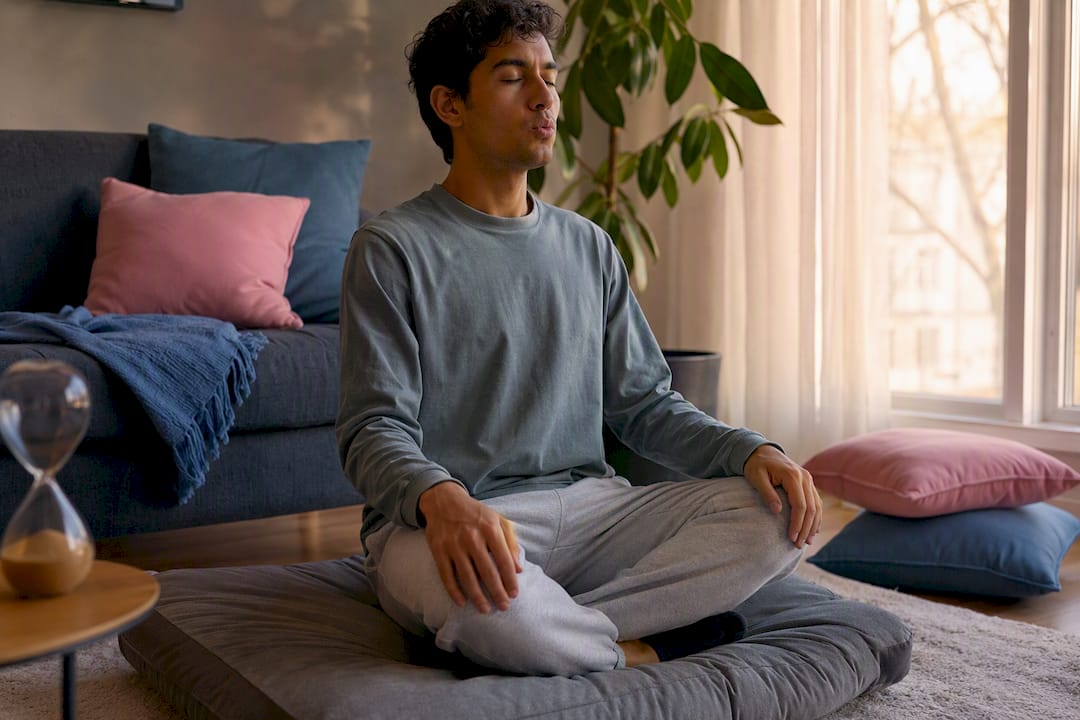
Lengthen your exhale and your nervous system starts to calm within seconds. That’s the single fastest lever you have: when the exhale runs longer than the inhale, it activates the parasympathetic nervous system and slows your heart rate. Box breathing and 4-7-8 breathing are the two go-to techniques worth trying first because they’re structured, easy to remember, and work in under two minutes.
Here are six techniques to try right now:
-
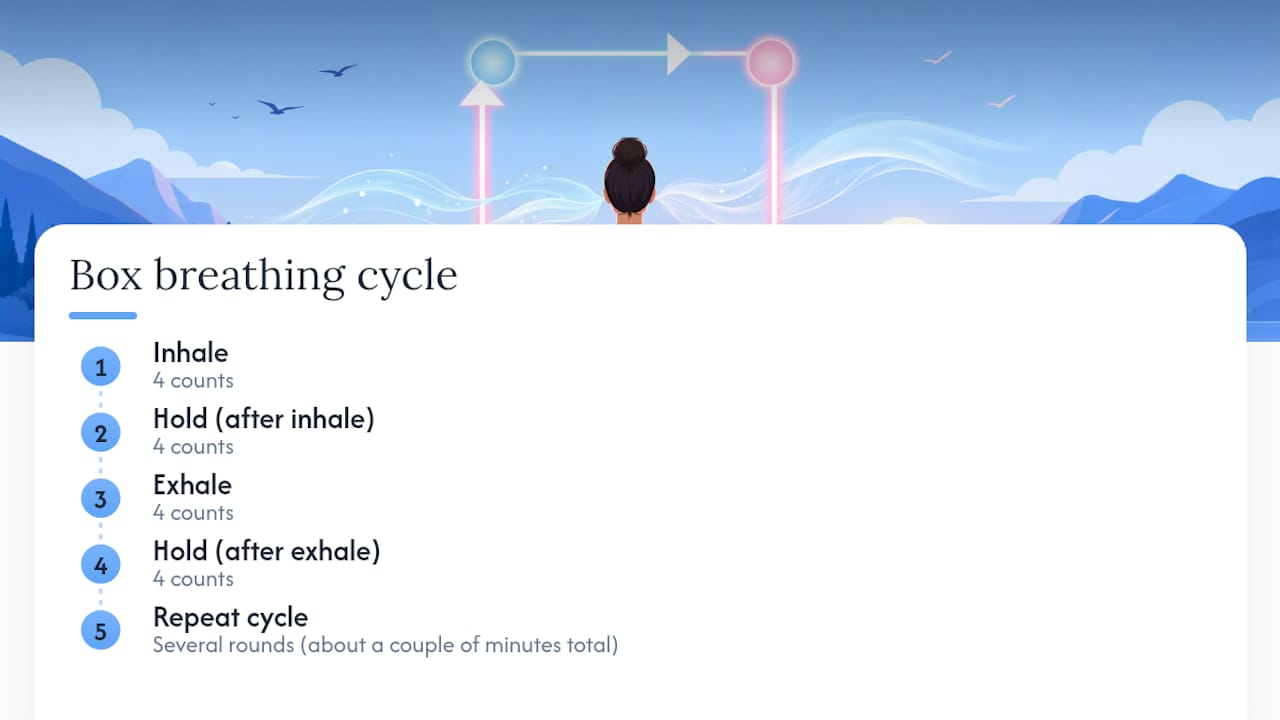
Box breathing: inhale 4 seconds, hold 4, exhale 4, hold 4. Repeat several times.
-
4-7-8 breathing: inhale for 4 seconds, hold for 7, exhale slowly for 8.
-
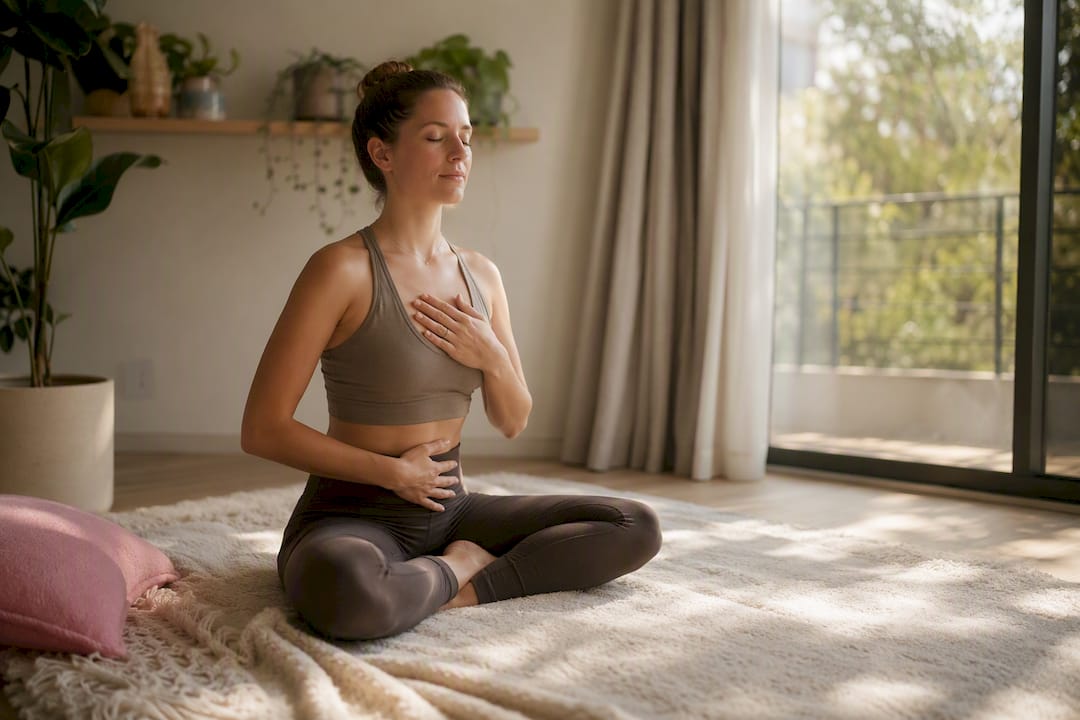
Diaphragmatic (belly) breathing: one hand on your chest, one on your belly. Breathe so only the lower hand rises.
-
Equal/paced breathing: inhale and exhale for the same count, usually 4 or 5 seconds each.
-
Pursed-lip breathing: inhale through your nose for 2 counts, exhale through pursed lips for 4.
-
Resonant breathing: breathe at roughly 5 to 6 breaths per minute, about 5 seconds in, 5 seconds out.
Pro Tip: If holding your breath feels uncomfortable or makes you dizzy, skip the hold entirely. Just focus on making your exhale longer than your inhale. That alone triggers the calming response.
Key Takeaways
Lengthening your exhale and practicing a structured technique daily, not just during a crisis, is what makes breathing exercises actually reduce anxiety.
| Point | Details |
|---|---|
| Start with exhale-first | Extending your exhale beyond your inhale is the fastest way to calm your nervous system. |
| Pick a structured technique | Box breathing or 4-7-8 work well because they give your mind a clear pattern to follow. |
| Practice daily, not just in crisis | Sessions of 5 minutes or more, done regularly, produce better results than one-off attempts. |
| Adapt for comfort | Shorten counts or skip holds if breath-holding feels forced or triggers dizziness. |
| Use guided tools for consistency | Apps like Life is a Game’s AI Therapist add structure and tracking that make daily practice easier to maintain. |
Table of Contents
Breathing Techniques for Anxiety: Step-by-Step Instructions
Each technique below takes less than five minutes to learn and works differently depending on what your body needs in the moment. Some calm a racing heart fast. Others build long-term resilience when practiced daily. Here’s how to do each one correctly.
4-7-8 breathing
Popularized as a fast-acting calming tool, this technique forces a longer exhale than most people manage naturally. Sit comfortably, close your mouth, and inhale quietly through your nose for 4 seconds. Hold for 7 seconds. Exhale completely through your mouth for 8 seconds, making a whoosh sound. Repeat for a few cycles. Use it in the moment before a stressful meeting or when lying awake at night. Skip the 7 second hold if it triggers dizziness. Just extend the exhale instead.
Box (square) breathing
Used by Navy SEALs and now common in clinical anxiety programs, box breathing gives your mind something structured to focus on, which interrupts spiraling thoughts. Inhale for 4 counts, hold for 4, exhale for 4, hold for 4, then repeat. Do several rounds, about a couple of minutes total. It works well standing in line, sitting at a desk, or before a presentation.
Diaphragmatic (belly) breathing
This is the foundation technique almost every other method builds on. Sit or lie down, place one hand on your chest and one on your belly. Inhale slowly through your nose, letting your belly rise while your chest stays still. Exhale slowly through pursed lips, feeling your belly fall. Practice several minutes daily. It’s the technique NHS guidance points to first because it’s low-effort and works anywhere, including in bed.
Equal (paced) breathing
Simplicity is the entire point here. Inhale for a count of 4 or 5, then exhale for the same count. No holds. Continue for 3 to 5 minutes. It’s a solid entry point if breath-holding of any kind feels uncomfortable.
Pursed-lip breathing
Originally taught to people with lung conditions like COPD, this technique slows your breathing rate and keeps airways open longer. Inhale through your nose for 2 counts, then exhale slowly through pursed lips (like blowing out a candle) for 4 counts. Use it during acute anxiety spikes or physical breathlessness. Sessions of 5 to 10 minutes work well daily.
Alternate-nostril breathing
A staple of yogic practice, this technique asks you to close one nostril with a finger, inhale through the open one, switch fingers, then exhale through the other side. Continue alternating for 3 to 5 minutes. Skip it if you have nasal congestion, since restricted airflow defeats the purpose.
Resonant (coherent) breathing
Breathing at roughly 5 to 6 breaths per minute has been shown to improve heart rate variability, a marker tied to stress resilience. Inhale for 5 seconds, exhale for 5 seconds, no holds. Several minutes daily is effective for building this into a lasting habit.
Bhramari (humming bee) and Sitali
Bhramari involves inhaling normally, then exhaling while humming like a bee with your ears gently plugged. It’s oddly effective for quieting racing thoughts fast. Sitali involves curling your tongue (or pursing your lips if you can’t curl it) and inhaling through your mouth, then exhaling through your nose. Both work in 2 to 3 minute bursts.
Pro Tip: If you have asthma or a heart condition, favor nasal breathing over long mouth-holds, and keep counts shorter. Sit down if you feel lightheaded, and stop any technique immediately if you notice chest pain.
All of these work seated, standing, lying in bed, or even lying flat if mobility is limited. Loosen tight waistbands or collars first. Restrictive clothing is a bigger obstacle to diaphragmatic breathing than most people realize.
Does Breathing Actually Reduce Anxiety?
Yes, according to a systematic review of 72 breathing interventions, 54 of them significantly reduced stress or anxiety. That’s a strong hit rate, but the details matter more than the headline number.
The interventions that worked shared three traits: they avoided fast-only breathing patterns, ran sessions of at least 5 minutes, and included some form of guided or repeated training rather than a single unstructured attempt. Programs that skipped these elements, especially ones relying on rapid, unguided breathing, showed far weaker results.
Guided training and long-term, repeated practice produce larger and more durable reductions in stress and anxiety than one-off, unguided sessions.
The practical takeaway: a five-minute daily habit with some structure, whether that’s a script, an app, or a recording, beats sporadic deep breaths taken only during a crisis. Practicing when you’re calm builds the neural groove your brain relies on when things get stressful.
How to Practice Breathing Exercises Safely
Breathing exercises are gentle by design, but a few ground rules keep them that way. Stop immediately if you feel chest pain, sharp dizziness, or severe air hunger, and talk to a clinician first if you have heart or lung disease.
-
If holding your breath feels forced, shorten the hold or drop it entirely. Softening your body during a pause works better than gripping through it.
-
During a panic spike, exhale first rather than trying to inhale deeply. A long exhale interrupts the panic response faster than a big inhale does.
-
Sit down, ground your feet, and loosen anything tight around your chest or waist before starting.
-
Anchor practice to something you already do daily, like your morning coffee or bedtime, so it becomes automatic within a few weeks.
Pro Tip: Two to five minutes, twice a day, beats one long session once a week. Consistency is what makes these techniques available to you automatically when anxiety actually hits.
How one small habit changed everything
I used to freeze before presentations, chest tight, mind blank. A coworker taught me box breathing. I practiced it daily when calm, not just when panicking. Within weeks, it became automatic before every stressful moment.
Build a Breathing Habit That Actually Sticks
Learning the techniques above is one thing. Remembering to use them at 2 AM or thirty seconds before walking into a meeting is another. That’s where guided, structured practice makes the real difference, and it’s exactly what a guided support tool is built for: short audio-led sessions that walk you through box breathing or 4-7-8 without you having to count in your head.
Life is a Game pairs that guided practice with progress tracking and gentle reminders, so a five-minute breathing session turns into a streak instead of a one-time attempt. If overwhelm is what triggers your anxiety in the first place, pairing breathwork with a tool like Signal not Noise to trim your daily to-do list down to three priorities can lower the baseline stress that makes breathing exercises necessary in the first place. And if you’re the type who needs a streak counter to stay consistent, Habit Forge turns the “twice daily for five minutes” advice into an actual habit instead of a good intention. Try a free guided breathing session through the Life is a Game app today and see whether structure is the missing piece in your practice.
Frequently Asked Questions
What is the best breathing exercise for anxiety? There’s no single best technique. Box breathing and 4-7-8 breathing tend to work fastest for acute anxiety, while diaphragmatic breathing builds the strongest long-term foundation when practiced daily.
What is the 5-5-5 breathing method? Inhale for 5 seconds, hold for 5 seconds, exhale for 5 seconds. It’s a simplified variant of box breathing, useful for people who find 4-count boxes too fast or 4-7-8’s hold too long.
Are breathing exercises safe for everyone? Generally yes, but people with asthma, COPD, or heart conditions should favor gentle, nasal, exhale-extended patterns and check with a clinician before long breath-holds, since forced holds can trigger dizziness or air hunger in some conditions.
How long should I practice breathing exercises each day? Five to ten minutes twice daily is a reasonable target. Research on breathing interventions found sessions of at least 5 minutes, done repeatedly, produced the most reliable reductions in anxiety.
Can breathing exercises help during a panic attack? Yes. Exhaling first, sitting down, and grounding your feet tend to interrupt escalation more reliably than trying to force a deep inhale, which can sometimes make panic feel worse.
This article is general information, not a substitute for advice from a qualified doctor. Consult a qualified healthcare professional about your own circumstances before acting on anything here.