
Micro Habits: The Tiny Actions That Build Real Change
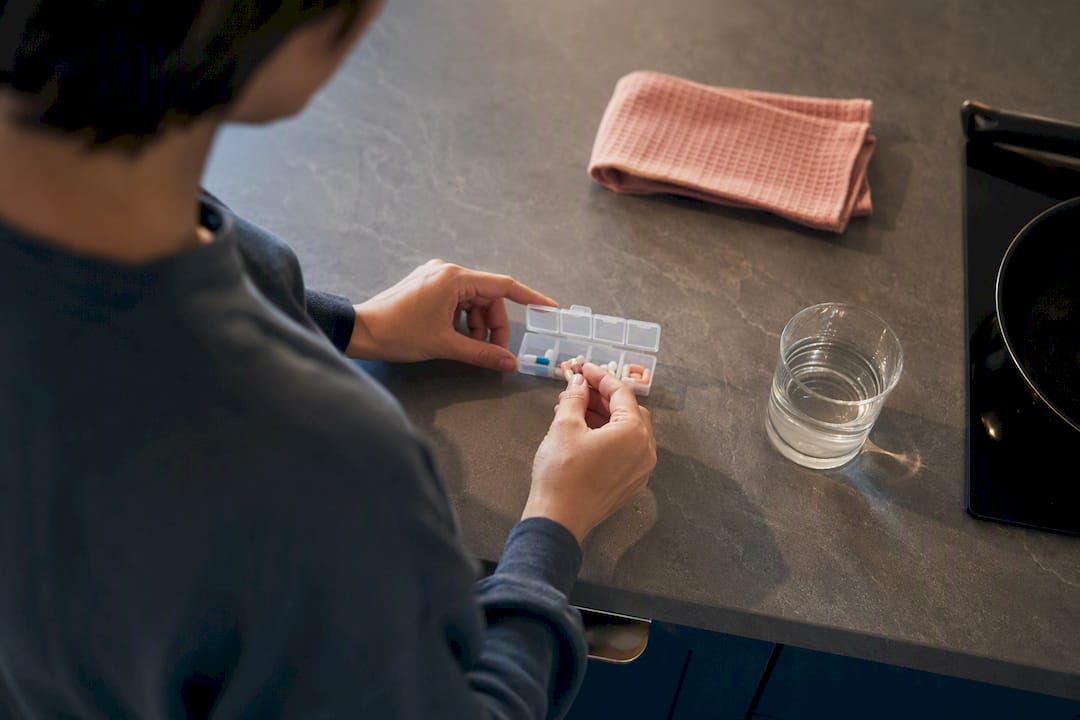
A micro habit is an action so small it takes less than two minutes and requires almost no willpower to complete. Flossing a tiny part of your teeth. Writing one sentence. Doing a very small number of push-ups after you brush your teeth. Start today: pick one tiny behavior, attach it to something you already do every day, and celebrate the second you finish it.
Here’s the mindset shift that matters most:
-
The goal isn’t the habit itself. It’s proving to your brain that you follow through.
-
Progress compounds slowly, and that’s the point. Keep the minimum version permanent even after you get stronger.
-
A habit that takes 10 seconds and happens daily beats a 30-minute routine you do twice a month.
Key Takeaways
Micro habits work because shrinking a behavior below the willpower threshold, anchoring it to a fixed cue, and celebrating instantly are what actually build automaticity.
| Point | Details |
|---|---|
| Start tiny, on purpose | Choose a behavior so small it takes under two minutes, not an ambitious version you’ll skip. |
| Anchor to a fixed cue | Attach the habit to something you already do daily, like brushing your teeth or making coffee. |
| Celebrate immediately | A quiet “yes” or fist pump right after completion triggers the reward signal that builds the habit loop. |
| Track reps, not results | Log a simple yes or no each day instead of measuring outcomes too early. |
| Scale slowly, keep the floor | Raise the difficulty only after roughly two weeks of consistency, and never remove the tiny version entirely. |
| Use Habit Forge to operationalize it | Life is a Game’s Habit Forge app builds the anchor, celebration, and streak tracking directly into daily use. |
Table of Contents
Micro Habit Examples for Every Part of Your Day
The fastest way to get started with micro habits is to steal ones that already work for other people, then anchor each one to something you do without thinking. Start with a small number to avoid abandoning them quickly.
Health
-
Drink a full glass of water right after you wake up.
-
Do a small number of squats while your coffee brews.
-
Floss a small part after brushing, which is fine to start.
-
Take a few deep breaths before checking your phone in the morning.
-
Stretch briefly after you close your laptop for the day.
-
Eat a small healthy item with lunch.
Focus
-
Write down your single most important task before opening email.
-
Close every browser tab except one before starting deep work.
-
Set a short timer before switching tasks, just to note where you left off.
-
Read one paragraph of a book instead of scrolling when you sit down to wait.
Mental health
-
Name one thing you’re grateful for while your coffee finishes.
-
Text one person you care about something small and specific.
-
Sit quietly for a short moment before opening your laptop.
-
Write one sentence about how you feel before bed.
Relationships
-
Send a good morning text to a partner or close friend.
-
Ask one specific question about someone’s day, not “how was it.”
-
Put your phone face down during the initial part of dinner.
Evening wind down
-
Lay out tomorrow’s clothes before brushing your teeth.
-
Write down one win from the day.
-
Dim the lights shortly before your target bedtime.
Pro Tip: Pair every micro habit with a tiny celebration, a fist pump, a quiet “yes,” a genuine smile. That instant positive feeling is what tells your brain to repeat the behavior tomorrow, and it works faster than tracking apps or willpower ever will.
Why Micro Habits Actually Work
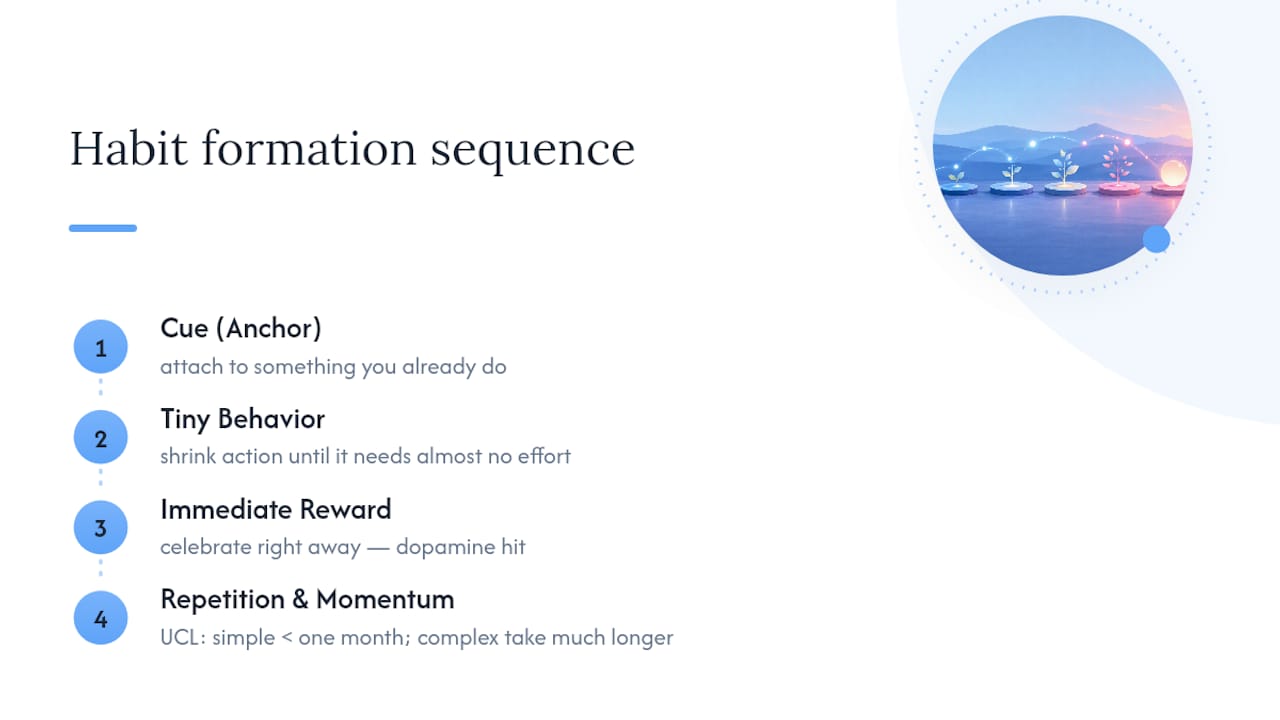
Willpower fails because it depends on motivation, and motivation is unreliable by nature. BJ Fogg’s Tiny Habits method sidesteps this entirely: shrink the behavior until it requires almost no effort, anchor it to something you already do, then celebrate immediately when you finish. Fogg’s research points to a simpler truth than most people expect.
Habits fail because people rely on motivation instead of redesigning the trigger and the environment around the behavior.
That’s not a minor tweak. It reframes the entire problem: you’re not broken or undisciplined, you’ve just been building habits the hard way.
Simple actions become automatic faster than complex ones. A UCL-linked study on habit formation found that basic behaviors can become routine in under a month, while more demanding actions take considerably longer to stop feeling effortful. Momentum builds from repetition, not intensity. Each tiny completion reinforces a neural loop of cue, behavior, and reward, and that reward signal (the small hit of dopamine from celebrating) is what actually cements the pattern. Small wins aren’t a consolation prize. They’re the mechanism.
How to Start, Track, and Scale a Micro Habit
Getting a micro habit to stick isn’t complicated, but skipping steps is exactly why most people quit within two weeks.
-
Pick one tiny, specific behavior. Not “exercise more.” Instead: “two push-ups after I close my laptop.” Vague habits die fast because your brain can’t tell if you succeeded.
-
Anchor it to a stable cue. Choose something that happens at the same point every day, brushing your teeth, starting your car, sitting down at your desk. The cue does the reminding so you don’t have to.
-
Celebrate the instant you finish. A quiet “yes,” a fist pump, a genuine smile. This step feels silly and it’s the one people skip most, which is exactly why it matters.
-
Track with a binary yes or no. Did you do it today? That’s the only question. Skip tracking duration, intensity, or outcomes, at this stage they only add friction.
Once a habit becomes automatic after some consistent practice, you can raise the floor slightly. Two push-ups can become four. One sentence of journaling can become three. Raise it too soon, though, and you risk breaking the very automaticity you just built.
Pro Tip: Never let the “advanced” version replace the tiny version entirely. Keep the two-minute floor available on hard days, a habit you can always do beats an ambitious one you sometimes skip.

Protect the cue above everything else. If your anchor habit changes (you switch coffee shops, your schedule shifts, you start working from a different room), the micro habit tied to it often disappears with it. Rebuild the link fast when your routine changes.
Where Micro Habits Go Wrong
Most micro habit failures trace back to one of four predictable mistakes.
-
Graduating too fast. Jumping from one push-up to a full workout plan in week two erases the automaticity you just built. Keep the minimum version permanent, forever, even once you’ve scaled up.
-
Tracking outcomes instead of reps. Measuring weight loss or productivity gains too early creates discouragement before the habit has even solidified. Track whether you did the behavior, nothing else.
-
Weak or shifting cues. An anchor like “sometime in the morning” is too vague to trigger consistent action. Anchor to a specific, unchangeable moment: right after you sit down, right after you brush your teeth.
-
Travel and low-energy days. Keep a “floor” version so tiny it survives jet lag, sickness, and chaos, one push-up instead of ten, one sentence instead of a page. The habit that survives bad days is the one that lasts.
How Life Is a Game Turns This Into a Daily System
Reading about micro habits is easy. Actually anchoring, celebrating, and tracking one every day for a month is where most people fall off, and that gap is exactly what Habit Forge was built to close. It applies the shrink, anchor, celebrate structure directly: you log a tiny rep, get an immediate in-app celebration, and build a visible streak that reinforces the same reward loop researchers describe.
The habit itself matters less than whether you can prove to yourself, daily, that you followed through.
If your micro habits keep getting crowded out by an overloaded to-do list, Signal not Noise limits your day to three priorities, which makes room to anchor a habit to one of them instead of losing it in the noise. For habits tied to anxiety, stress, or emotional regulation, Groundwork offers evidence-based support between sessions, and Conquer Fear applies the same shrink-and-repeat logic to exposure-based fear reduction.
Try logging one tiny rep in Habit Forge today. That single entry is worth more than a week of planning.
What the Research Actually Tells You to Do First
Most habit advice online treats consistency as a personality trait, something you either have or you don’t. That’s backwards, and it’s the biggest misconception in this entire space. Consistency is a design problem, not a character flaw. Fogg’s research and the broader automaticity findings agree on this point: the people who succeed aren’t more disciplined, they’ve just built systems that don’t require discipline in the first place.
The conventional advice to “just be more consistent” fails because it skips the anchor and the celebration, the two steps that actually do the work. I’d argue the celebration step is the most underrated part of the entire method. People treat it as optional or embarrassing, then wonder why their habit doesn’t stick after two weeks. It’s not decoration. It’s the mechanism.
If you take one thing from this guide, make it this: choose a floor so small you’d feel ridiculous skipping it, and never raise that floor faster than your consistency earns it. Everything else, apps, trackers, streaks, is scaffolding around that one decision.
— Ryan
Start Your First Micro Habit Today
Life is a Game turns the Tiny Habits method into something you actually do instead of just read about. Rather than another journal or planner that depends on you remembering to open it, Habit Forge builds the cue, the celebration, and the streak directly into daily use, so the habit loop researchers describe happens automatically instead of relying on your memory at 11 p.m.
If your struggle is less “which habit” and more “too much on my plate to anchor anything,” pair it with Signal not Noise, which caps your day at three priorities so a new micro habit has somewhere to attach. And if the habit you’re building is tied to anxiety or fear rather than productivity, Conquer Fear applies the same shrink-it-down approach to exposure work, with support resources available if you get stuck along the way. Download Habit Forge and log your first tiny rep before the day ends.