7 Step Ladder to Stop Reassurance Seeking for Attachment Anxiety

Ground your nervous system first, then build evidence: five slow breaths and a short pause before you text back handle the next ten minutes. The longer fix is deliberate practice, graded exposure to uncertainty, and often therapy, since anxious attachment is a learned pattern, not a fixed trait. People move toward what researchers call earned secure attachment through repetition, not insight alone.
TL;DR:
- Naming specific triggers like delayed responses or physical distance allows targeted use of grounding and physiological techniques to quickly regulate anxiety.
- A structured delay before acting or messaging helps break the impulsive spiral, with gradual exposure steps reducing overall reassurance-seeking behaviors over time.
- Therapy modalities such as CBT, DBT, and attachment-based approaches are supported by research to strengthen attachment security and improve relational trust.
- Tracking progress through journaling, fear ratings, and app logs enhances self-awareness and accelerates habit formation for managing anxious attachment.
- Small, consistent daily practices and gradual exposure exercises show noticeable improvements within weeks, with deeper change often taking months to a year.
Table of Contents
- Signs of Anxious Attachment Help Can Actually Target
- What Can You Do in the Moment You’re Triggered?
- Which Therapies Actually Help With Attachment Anxiety?
- Scripts and Small Experiments That Rebuild Trust
- A Daily Routine and a 7-Step Ladder for Reassurance-Checking
- How Long Does This Actually Take?
- A Small Experiment That Worked, and One That Didn’t
- Practicing the Ladder Between Sessions
- Sources
- FAQ
Signs of Anxious Attachment Help Can Actually Target
Anxious, or preoccupied, attachment shows up as a chronic fear that people will leave or stop caring, paired with behaviors aimed at keeping them close. It usually traces back to inconsistent caregiving early in life, where love and attention arrived unpredictably, so the nervous system learned to stay on alert for signs of withdrawal. That alert system doesn’t turn off just because you’re now an adult with a functioning relationship.
The behavioral signs are the easiest to spot from the outside. You reread texts for hidden meaning. You ask “are we okay?” more than the relationship’s actual temperature warrants. You give in on boundaries you’d otherwise hold, because keeping the peace feels safer than risking distance.
The emotional and physical signs are quieter but often worse. A delayed reply triggers a spiral: they’re mad, they’re pulling away, this is ending. Your chest tightens, your stomach drops, and your brain treats a slow text response like a physical threat.
Common triggers worth naming specifically, because vague anxiety is much harder to work with than a labeled trigger:
- Delayed replies to texts or calls
- A partner spending time with friends without you
- Any sign of conflict, even minor disagreements
- Physical distance, like a partner traveling
- Perceived tone shifts in someone’s voice or wording
- Silence after a vulnerable conversation
Naming the exact trigger, rather than a general sense of dread, is what lets you apply a specific tool instead of just white-knuckling through the feeling. “I’m anxious” is hard to act on. “I’m anxious because he hasn’t texted back in three hours” gives you something to work with.
What Can You Do in the Moment You’re Triggered?
The goal here isn’t to feel calm. It’s to lower your body’s alarm response enough that your thinking brain comes back online before you act. Anxious attachment hijacks judgment fast. These steps buy back a few minutes of clear thinking.
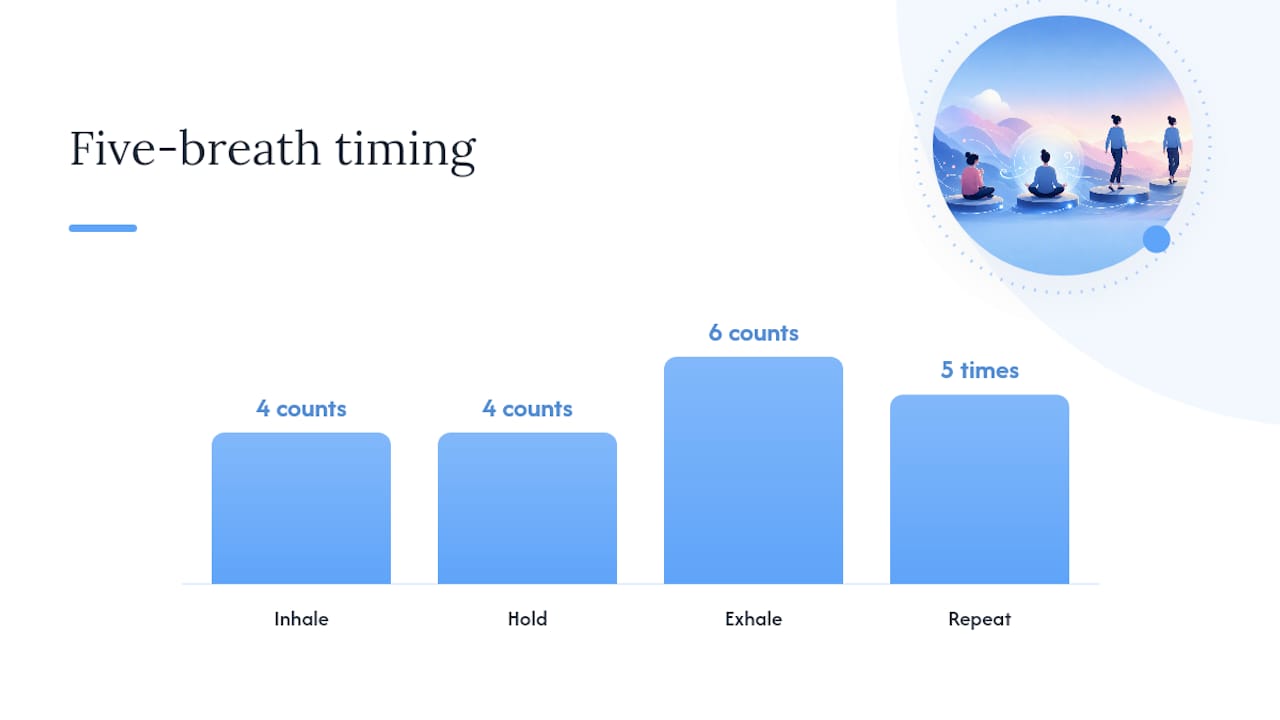
- Do the five-breath reset. Inhale for a count of 4, hold for 4, exhale for 6, and repeat five times while naming one physical sensation you notice (“my jaw is tight,” “my hands are cold”). Longer exhales specifically signal safety to your nervous system through vagal activation, which is why this works faster than just “taking a breath.”
- Run a quick TIPP check. Borrowed from dialectical behavior therapy, TIPP stands for Temperature, Intense exercise, Paced breathing, and Progressive muscle relaxation. Splash cold water on your face, do twenty jumping jacks, or grip an ice cube. Any of these interrupts the physiological spiral faster than trying to think your way out of it.
- Find a somatic anchor. Press your feet into the floor, name five things you can see, or hold something with texture. This pulls attention out of your head and back into your body, where the panic loop can’t sustain itself as easily.
- Label the thought, then check the evidence. Write one sentence: “I’m having the thought that they’re losing interest.” Then write what you actually know: when they last replied, what they said, whether this pattern has happened before and how it resolved. Separating the thought from the fact is the entire skill.
- Set a delay before you act. Decide on a fixed wait, 20 minutes, an hour, until after dinner, before you send another message or bring up the fear out loud. Tell yourself you can still send it after the delay if you want to. Most of the time, the urgency fades once the body calms down.
Pro Tip: Keep a running note on your phone titled “Evidence.” Every time a fear turns out to be wrong, one line: “Thought he was pulling away on Tuesday. He was just at a work thing.” Read it before your next spiral. It’s harder to catastrophize when you have a paper trail proving your alarms are frequently false.
None of this erases the anxiety permanently in one session. What it does is create a gap between trigger and action, and that gap is where actual change happens. Cleveland Clinic’s overview of anxious attachment notes that grounding, mindfulness, and journaling are commonly recommended alongside therapy precisely because they reduce reassurance-seeking in the moments when it matters most, not just in a therapist’s office once a week.
If phone-based anxiety, specifically waiting for a reply or dreading a call, is a recurring flashpoint for you, a structured tool built around gradual exposure can help you practice sitting with that discomfort in smaller, controlled doses. Life is a Game’s phone-call fear page walks through this kind of graded practice if that particular trigger is a major driver of your anxiety.
Which Therapies Actually Help With Attachment Anxiety?
Several modalities have real traction here, and they work differently depending on what’s driving your pattern.
- Cognitive behavioral therapy (CBT) targets the automatic thoughts fueling the panic, teaching you to catch and challenge the “they’re leaving me” narrative before it drives behavior.
- Dialectical behavior therapy (DBT) focuses on regulating intense emotion and tolerating distress, which is often the missing piece for people who know their fears are irrational but still can’t stop reacting to them.
- Attachment-based therapy works directly with your relational patterns, using the therapy relationship itself as a place to practice trust and tolerate closeness without panic.
- EMDR (Eye Movement Desensitization and Reprocessing) can help when the anxious pattern is rooted in specific past experiences of abandonment or instability that still feel unresolved.
- Emotionally Focused Therapy (EFT), often used with couples, directly addresses the anxious-avoidant cycle when both partners are willing to work on it together.
The evidence: A 2019 meta-analysis of 36 studies and 3,158 patients found that increases in attachment security during therapy were significantly associated with better psychotherapy outcomes overall (r = 0.16, p < 0.001). The relationship isn’t just correlational noise. Researchers point to the therapeutic relationship itself as a mechanism, since a steady, boundaried connection with a therapist becomes a lived counterexample to the abandonment your nervous system expects.
That last point matters more than most people realize. You’re not just learning coping skills in therapy. You’re experiencing, week after week, a relationship that doesn’t vanish when you’re needy, doesn’t punish you for asking questions, and shows up reliably. That’s a corrective emotional experience, and it’s part of why attachment work tends to take longer than symptom-focused therapy for anxiety alone.
When you’re vetting a therapist, ask directly: “Do you work with attachment patterns specifically, and what does that look like in session?” A therapist doing real interpersonal work will talk about how you two relate in real time, not just what happened in your past. Ask how they handle ruptures, like a canceled session or a moment you feel dismissed, since how they repair that is itself part of the treatment.
Scripts and Small Experiments That Rebuild Trust
Reassurance you demand feels different from reassurance you receive unprompted. The first confirms your fear that you had to extract it. The second becomes real evidence. That’s why the goal isn’t to stop asking for anything, it’s to ask cleanly, once, and let the answer stand instead of chasing it.
Three scripts to adapt in your own words:
- Asking for reassurance: “I’m feeling anxious tonight and I know it’s probably not about you. Could you tell me we’re okay, and I’ll try to sit with that instead of asking again?”
- Setting a boundary: “I noticed I keep checking in when you’re out with friends. I’m going to work on not doing that, so if I go quiet for a bit, that’s me practicing, not upset with you.”
- Naming a trigger without blame: “When you took a while to respond earlier, my anxiety spiked. I know that’s my pattern, not something you did wrong. I’m telling you so you understand, not asking you to change.”
Micro-experiments turn this into practice instead of theory. Pick one low-stakes situation, decide in advance how long you’ll wait before checking in (start with something slightly uncomfortable, not unbearable), and log what actually happened afterward. Did they respond within the window? Did the world end when they didn’t? Write it down. Small accumulated evidence rewires expectation far more reliably than a single reassuring conversation ever does.
Pro Tip: Run the experiment with something you genuinely don’t need an answer to urgently, like waiting two hours instead of twenty minutes to reply to a low-stakes text yourself. Practicing the discomfort in a direction you control builds the same tolerance without depending on someone else’s timing.
One caution: none of this applies if you’re dealing with a partner who is actually inconsistent, dismissive, or contemptuous on purpose. Anxious attachment can make you tolerate real red flags, like stonewalling, gaslighting, or a pattern of broken promises, by mistaking chronic instability for your own overreaction. If the fear is proportional to the situation, that’s not a distortion to challenge. That’s information to act on.
A Daily Routine and a 7-Step Ladder for Reassurance-Checking
Consistency beats intensity here. A short daily practice does more for attachment security than one long session once a week, because you’re retraining a reflex, not solving a puzzle.
A simple daily structure: five minutes of journaling using the thought-and-evidence format from earlier, one grounding session even on calm days so the skill is automatic when you need it, a brief self-compassion line like “this is hard, and I’m allowed to feel it without acting on it,” and one small social experiment, initiating contact, sitting with silence, or trying a phrase from the scripts above.
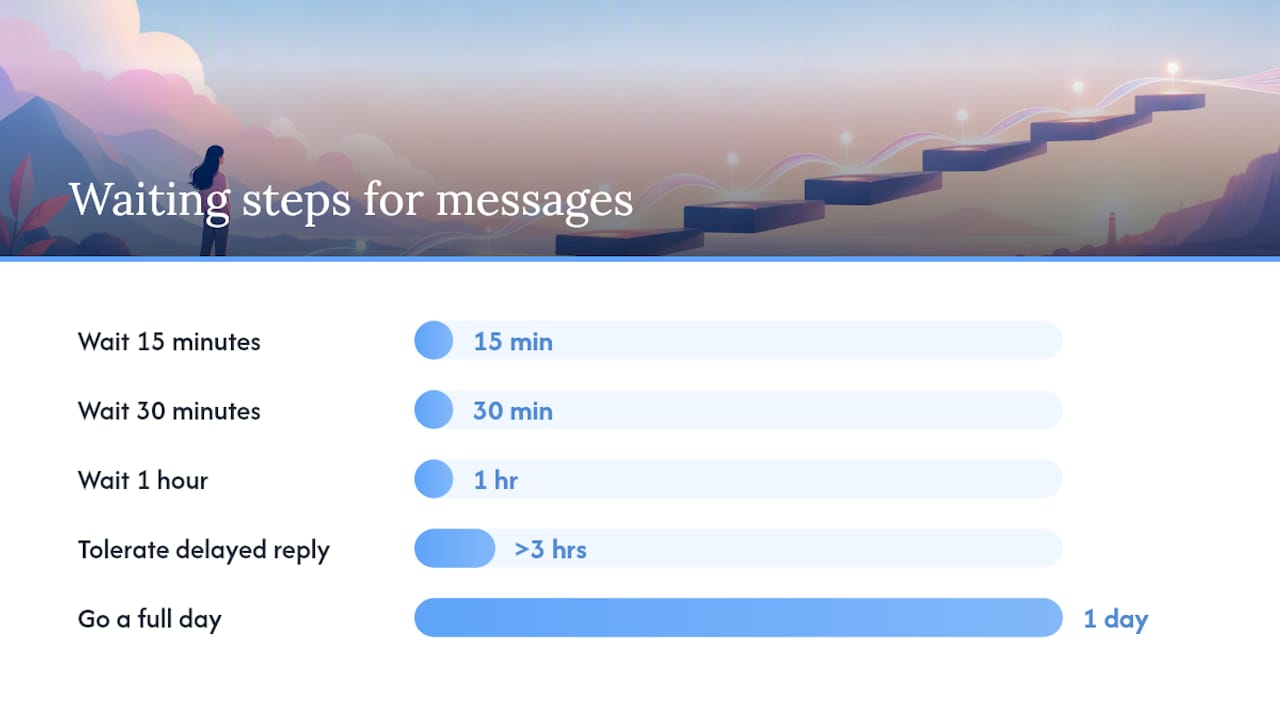
For the specific habit of checking or messaging repeatedly, a graded exposure ladder works the same way it does for any anxiety-driven avoidance pattern. Rate your fear from 0 to 10 before and after each step, and don’t move up until a step feels manageable, not fear-free, just manageable.
- Wait 15 minutes before replying to a non-urgent text, rate your fear before and after.
- Wait 30 minutes on a similar message.
- Ask a reassurance question once, then wait one hour without following up.
- Let a full evening pass without checking in on someone’s whereabouts or mood.
- Sit through a delayed reply (over 3 hours) without sending a follow-up message.
- Bring up a mild disagreement and tolerate the silence that follows without repairing it instantly.
- Go a full day without any reassurance-seeking behavior, then journal what you noticed in your body and thoughts.
This same ladder structure adapts to other triggers, dread before a call, anxiety before seeing someone in person, panic before a goodbye. The mechanics don’t change: name the trigger, rate the fear, take the smallest tolerable step, log the outcome, repeat. If you’re working with a therapist or coach, this kind of structured log is exactly what makes sessions useful, since you’re bringing real data instead of a vague “I’ve been anxious this week.”
How Long Does This Actually Take?
Expect small, noticeable gains within a few weeks, mostly in catching the spiral faster and shortening how long it lasts. Measurable shifts in your default reactions, checking less, tolerating silence better, tend to show up over a few months of consistent practice. Deeper changes to your baseline sense of security, the kind that shows up automatically instead of requiring conscious effort, often take a year or more, particularly if the pattern formed in early childhood.
A simple tracking approach keeps this honest instead of guesswork:
- A daily one-line symptom log: what triggered anxiety, what you did about it.
- A weekly reflection: what pattern showed up more than once, what worked.
- A fear rating (0 to 10) before and after each exposure step or hard conversation.
Watch for signs you need more support than self-guided tools can offer: panic that doesn’t ease with grounding, relationships ending repeatedly in the same pattern despite real effort, or anxiety spilling into depression, substance use, or self-harm thoughts. Any of those warrants a licensed therapist, not just more journaling.
A Small Experiment That Worked, and One That Didn’t
I’ve watched the wait-before-replying exercise work faster than almost any other step in this kind of practice, because it produces immediate, undeniable evidence: the relationship survives forty-five minutes of silence. That’s not theory, it’s a fact you just lived through.
What tends to backslide is the boundary-setting script, especially under real stress. It’s easy to rehearse “I’m going to work on not checking in” when you’re calm. It’s much harder at 11 PM when someone’s flight lands and they haven’t texted. That’s normal. A setback in the moment isn’t proof the method failed. It’s proof you’re practicing something genuinely hard, and the tracking log is what shows you the trend line instead of just the bad night. For more on turning that kind of daily reflection into a habit that sticks, Life is a Game’s guide to journaling for anxiety breaks down prompts that work well alongside this exact practice.
— Ryan
Practicing the Ladder Between Sessions
Everything in this guide, the breathing resets, the delay scripts, the exposure ladder, works better with a way to actually track it instead of relying on memory. That’s the specific gap a structured app fills that a notebook usually doesn’t: automatic fear ratings before and after each step, a visible log of how many times your worst prediction turned out wrong, and steps broken small enough that you’re not white-knuckling a giant leap.

A graded exposure app, inspired by exposure principles from structured anxiety work, can help with this kind of practice. If reassurance-checking shows up most around phone silence, you build a ladder like the one above directly in the app: rate your fear before you resist checking in, log it again after, and watch the numbers trend down over real attempts instead of guessing whether you’re improving. If you’re working with a therapist or coach already, some platforms can enable sharing of progress so they see what steps you actually attempted between sessions, not just what you remember to mention.
It’s worth saying plainly: this is a self-guided tool, not therapy, and it doesn’t diagnose or treat anything. What it does is make the practice part of healing easier to stick with. If a specific fear, like the gym, flying, or confrontation, tangles up with your attachment anxiety, check the relevant fear page and start with one small step today.
Sources
- Adult attachment as a predictor and moderator of psychotherapy outcome: A meta‐analysis (Levy et al., 2019)
- Anxious attachment style: Signs, root causes, and how therapy can help — Cleveland Clinic
- How to heal anxious attachment by prioritizing your own needs — Greater Good (Judy Ho, 2024)
This article is general information, not a substitute for advice from a qualified doctor. Consult a qualified healthcare professional about your own circumstances before acting on anything here.
FAQ
How can I overcome anxious attachment?
Start with regulating your nervous system in triggering moments (grounding, delayed response), then build long-term change through consistent practice, small relational experiments, and attachment-focused therapy such as CBT, DBT, or attachment-based approaches when the pattern is deeply rooted.
Can medication help with anxious attachment?
Anti-anxiety or antidepressant medication can ease the physical intensity of anxiety symptoms for some people, but it doesn’t directly change attachment patterns, which are relational and behavioral; medication works best alongside therapy or structured practice, not as a standalone fix.
How can I help someone with attachment anxiety?
Offer consistent, predictable responses rather than sporadic over-reassurance, since unpredictability is often what fuels the anxious pattern in the first place, and encourage them to name specific triggers rather than treating the anxiety as a mystery.
What is obsessive attachment?
The term usually describes an intense, preoccupying fixation on a relationship, marked by constant monitoring, difficulty focusing on anything else, and distress that’s disproportionate to the actual relationship, which often overlaps heavily with anxious attachment but can also involve more compulsive checking behavior.