
Fear of Doctors: Start With a 5-Minute Check-In to Feel Safer
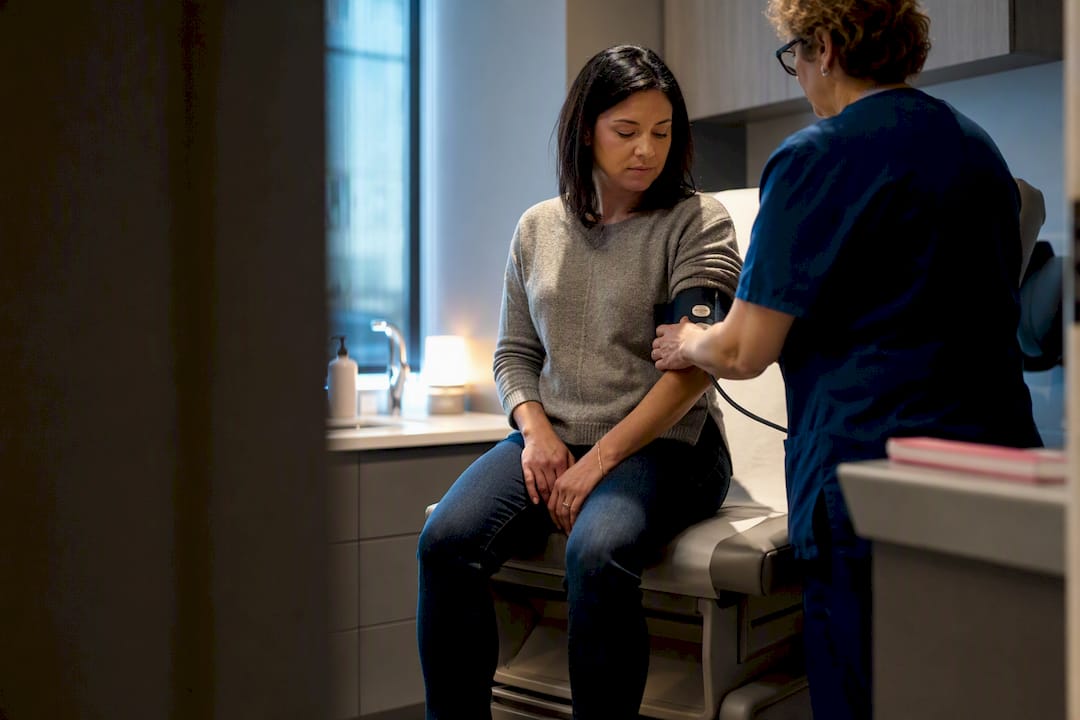
Fear of doctors, known clinically as iatrophobia, is an intense anxiety response to medical settings, professionals, or procedures that can be reduced with small, consistent steps. If you have been avoiding care, the safest next step right now is a low-stakes contact, such as a telemedicine visit or a short phone call to the clinic to ask about your options before you commit to an in-person visit.
TL;DR:
- Avoiding medical care due to fear can lead to delayed diagnoses and worsened health outcomes, especially if symptoms are ignored or tests are skipped.
- Anxiety triggers such as smells, sights, or past negative experiences can provoke a fight-or-flight response, heightening physical symptoms during appointments.
- Gradual exposure, relaxation techniques, and professional support can effectively help diminish the fear and improve the ability to attend necessary healthcare visits.
- Booking early appointments, calling ahead, and using telemedicine can make scheduling and attending visits less stressful for anxious patients.
- Small, consistent actions like a brief phone call or a low-stakes appointment are more effective for progress than trying to overcome the fear in one overwhelming step.
Table of Contents
- What Is Fear of Doctors and How Does It Develop?
- Symptoms of Doctor Anxiety and How to Tell If It’s a Phobia
- Why Avoiding Doctors Is Riskier Than It Feels
- When to Seek Professional Help for Doctor Anxiety
- Evidence-Based Treatments and Coping Strategies That Work
- Practical Appointment Tactics for the Day of Your Visit
- A Publisher’s Take: Small Steps Beat Big Leaps
- An Honest Note on Getting Started
- Try a Guided First Step Before Your Next Appointment
- Sources
- FAQ
What Is Fear of Doctors and How Does It Develop?
Iatrophobia is the clinical term for an intense, persistent fear of doctors or medical settings. Some people use “medical anxiety” or “medical test anxiety” interchangeably, though those terms often describe a milder, more situational version of the same problem.
This fear rarely comes from nowhere. Childhood medical trauma, such as a painful procedure or a frightening diagnosis delivered without warning, tends to leave a mark that resurfaces every time a waiting room smell or a stethoscope shows up. Repeated invasive procedures, chronic illness that required years of testing, and past experiences of being dismissed or mistreated by a provider all build the same pattern of dread.
Specific sensory cues often do the heavy lifting in triggering a reaction. Common ones include:
- The smell of antiseptic or a specific clinic
- The sight of a white coat, needle, or exam table
- Being touched or examined by a stranger
- Waiting for test results or a diagnosis
- Memories of a past bad experience resurfacing mid-visit
Harvard Health notes that these triggers can provoke a genuine fight-or-flight response, not just discomfort. Your body reacts as if it is facing real danger, because to your nervous system, it is.
Symptoms of Doctor Anxiety and How to Tell If It’s a Phobia
Fear of medical professionals shows up differently for everyone, but the pattern usually falls into three buckets: physical, psychological, and behavioral.
- Physical symptoms. A racing heart, sweating, nausea, dizziness, shortness of breath, or a full panic attack in the days before or during an appointment.
- Psychological symptoms. Obsessive worry in the lead-up to a visit, catastrophic thinking about what a doctor might find, or a sense of dread that lingers for days afterward.
- Behavioral patterns. Skipping checkups entirely, canceling appointments last minute, delaying screenings you know you need, or needing a family member present just to walk through the clinic door.
None of that automatically means you have a diagnosable phobia. Plenty of people feel nervous before an appointment and still go. The American Psychiatric Association’s diagnostic criteria for specific phobia set a clearer bar: the fear has to be intense and disproportionate to the actual risk, and it needs to persist for six months or longer while meaningfully interfering with your life, whether that means missed care, lost sleep, or strained relationships.
That six-month marker matters because it separates situational nerves from something worth addressing directly. If you have canceled the same appointment three times in a row for a year, that is not simple nervousness. It is a pattern, and patterns respond to targeted strategies far better than willpower does.
Why Avoiding Doctors Is Riskier Than It Feels
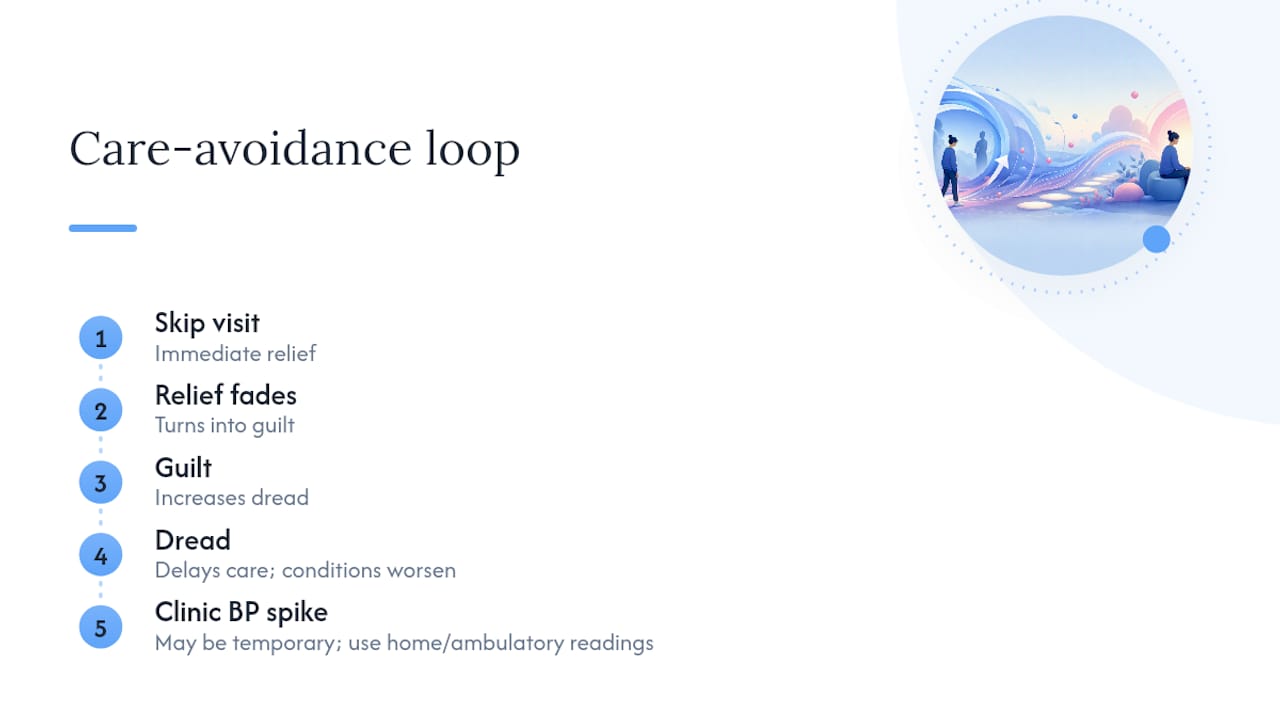
Skipping care feels like relief in the moment. It rarely stays that way. Avoidance delays blood pressure checks, cancer screenings, and early symptom evaluations, letting treatable conditions progress into harder ones. A skipped mammogram or colonoscopy does not make the underlying risk disappear. It just pushes discovery further down the road, often to a stage where treatment is more invasive.
There is also a measurement problem tied directly to the fear itself. Clinic anxiety can spike blood pressure readings during a visit, a phenomenon called white-coat hypertension, where numbers look alarming in the exam room but return to normal at home. Harvard Health’s guidance recommends home or ambulatory monitoring to sort out whether high readings reflect a real problem or just the stress of being there.
A survey cited by PR Newswire found that nearly half of American adults report feeling anxious before a doctor’s appointment, and some delay care specifically because of that dread. The avoidance cycle feeds itself: skip a visit, feel relief, feel guilt, dread the next one even more.
When to Seek Professional Help for Doctor Anxiety
Some situations call for more than self-help. If you experience full panic attacks before appointments, if the fear has stopped you from getting care for a symptom you know needs attention, or if the anxiety has lasted six months or more and is affecting your health decisions, it is time to loop in a professional.
Different clinicians offer different kinds of support:
- Primary care providers can often adjust how an appointment is run, offer a slower pace, or refer you onward.
- Therapists, particularly those trained in cognitive behavioral therapy (CBT) or exposure therapy, address the fear directly rather than just managing symptoms in the moment.
- Psychiatrists can evaluate whether short-term medication support makes sense alongside therapy, especially for severe anxiety or panic.
You do not need to arrive with a script. A simple, honest line works: “I have a hard time with medical visits. Can we start with a shorter appointment or talk through what to expect first?” Most clinics can accommodate a first visit that is lower-stakes, a slower exam pace, or a telehealth check-in before you commit to an in-person follow-up.
Evidence-Based Treatments and Coping Strategies That Work
Cognitive behavioral therapy is the most established treatment for specific phobias, and graded exposure is the piece that does most of the work. The logic is straightforward: instead of avoiding the fear, you approach it in small, manageable doses until your nervous system stops treating it as a threat.
Graded exposure for doctor anxiety might look like this:
- Start by simply imagining a calm, successful visit in detail (imaginal rehearsal).
- Drive to the clinic parking lot without going inside.
- Sit in the waiting room for five minutes, then leave.
- Book a short, low-stakes appointment, like a prescription refill.
- Work up to a full checkup or procedure over several sessions.
Each step should feel only mildly uncomfortable, not overwhelming. If a step spikes your anxiety past a 7 out of 10, break it into something smaller.
Relaxation techniques help you get through the moments’ exposure alone can’t smooth out. Slow diaphragmatic breathing, progressive muscle relaxation, and grounding exercises (naming five things you can see, four you can hear) all lower physical arousal fast enough to use in a waiting room. Some people also find guided relaxation or hypnosis-based audio helpful as a complementary tool alongside CBT, though it works best as a supplement, not a replacement for exposure work.
Medication has a role for some people, typically as short-term support to blunt acute anxiety while therapy addresses the root pattern. That decision belongs to you and a prescriber, not a general guideline, since the right approach depends on your specific history and other health factors.
Pro Tip: Rehearse the whole visit out loud once, from parking the car to hearing the doctor’s first question. Verbal rehearsal engages your brain differently than silent worry does, and it often takes the edge off more than reading about coping strategies ever will.
Practical Appointment Tactics for the Day of Your Visit
The right prep on the actual day matters as much as any long-term strategy. Here is what tends to move the needle:
- Book the first appointment of the day. Shorter wait times mean less time to spiral, and clinics tend to run closer to schedule early on.
- Call ahead and flag your anxiety. Front desk staff can often shorten your wait or prep the provider to move at a slower pace.
- Bring a support person or a distraction. A trusted friend, a podcast, or a fidget object can anchor you during the wait.
- Use a short script. Tell the clinician directly: “I get anxious in medical settings, so a quick heads-up before anything happens really helps.”
- Ask about accommodations. Options range from a longer first visit to skipping small talk and going straight to the point.
- Consider telemedicine as a bridge. A video visit can be a lower-stakes way to address a concern or build trust with a provider before an in-person appointment feels possible. The Mayo Clinic Press guide to appointment anxiety lists telemedicine specifically as a reasonable transitional step for people who are not ready to walk into a clinic.
A Publisher’s Take: Small Steps Beat Big Leaps
Most advice about doctor anxiety tells people to “just go.” That advice ignores how phobias actually work. Nobody talks themselves out of a fight-or-flight response with logic alone. What actually shifts the pattern is repeated, low-stakes practice that teaches your nervous system the clinic is not the threat it feels like.
The people who make progress with medical anxiety are rarely the ones who force themselves through one terrifying appointment. They are the ones who break the fear into pieces small enough to practice daily, the way you’d train for a race instead of trying to run it cold.
Life is a Game builds its fear of doctor visits guide around that exact idea: bite-sized, gamified steps inspired by exposure principles, with progress you can actually track between sessions. It is worth being direct about what this is and is not. It is a self-guided tool for practicing small steps, not therapy, and it does not treat, cure, or diagnose anything. For anyone whose fear is severe or has lasted years, it works best alongside a licensed therapist, not instead of one.
An Honest Note on Getting Started
Feeling scared of doctors does not mean something is wrong with you. It usually means something happened once, and your brain is still trying to protect you from a repeat. That protective instinct is not a character flaw. It is just outdated information your nervous system hasn’t updated yet.
The path out is rarely dramatic. It is a string of small, boring, repeatable steps: a phone call, a short visit, a longer one. Progress in this area tends to look unglamorous right up until it doesn’t.
If you take away one thing from this article, make it this: pick the smallest possible action you can do today. Call your clinic and ask about a five-minute check-in, or just look up their telehealth options. That is enough for today.
— Ryan
Try a Guided First Step Before Your Next Appointment
If reading through graded exposure steps feels useful but hard to actually start on your own, that’s the exact gap a structured, self-guided app can fill without asking you to walk into a clinic cold. Life is a Game’s fear of doctor visits program breaks the process into small, trackable tasks inspired by exposure principles, from imagining a calm visit to practicing shorter, lower-stakes steps before a real appointment.
It suits people who know they need care but keep finding reasons to put it off, and who want a low-pressure way to practice before facing a waiting room. It is not therapy and makes no promises about curing anxiety, but it gives you a structured place to start today. If needles are part of what you’re avoiding, the fear of needles guide tackles that specific trigger the same way. Open the app, pick your first tiny step, and see how it feels before you book anything.
Sources
- Iatrophobia (Fear of Doctors): Symptoms, Causes & Treatment — Cleveland Clinic
- Afraid of doctors? Tips for appointment anxiety — Mayo Clinic Press
- Afraid to visit the doctor? — Harvard Health Publishing
This article is general information, not a substitute for advice from a qualified doctor. Consult a qualified healthcare professional about your own circumstances before acting on anything here.
FAQ
How Do I Get Over the Fear of Doctors?
Start with graded exposure: small, repeated steps like sitting in a waiting room briefly or booking a low-stakes appointment, combined with breathing techniques and, if the fear has lasted six months or longer, support from a CBT-trained therapist.
What Is a Phobia of Doctors Called?
The clinical term is iatrophobia, though people also describe it as medical anxiety or doctor anxiety depending on severity and specific triggers.
What Is Tomophobia?
Tomophobia refers specifically to a fear of medical procedures or surgery, which often overlaps with iatrophobia but centers more narrowly on invasive treatments rather than doctors or clinics in general.
Why Do I Get So Anxious Going to the Doctor?
Anxiety before appointments often stems from sensory triggers like antiseptic smells or white coats, past negative experiences, or fear of bad news, and clinic stress can even raise blood pressure temporarily through white-coat hypertension.
Can an App Really Help With Fear of Doctors?
A self-guided app inspired by exposure principles, such as Life is a Game’s doctor-visits program, can help you practice small steps and build confidence before appointments, though it works as a complement to professional care, not a replacement for it.