72.6% of Adults Fear the Dentist, Plus CBT, Micro Steps and an App

Dental anxiety is a persistent fear or dread tied to dental visits or procedures, while dentophobia (also called odontophobia) is the more intense, specific phobic version that drives outright avoidance. Roughly 72.6% of American adults report some level of dental fear, with 26.8% describing it as severe. If this is you, the single best next move is telling your dental team before the appointment starts and asking for one concrete accommodation, like headphones or an agreed stop signal.
TL;DR:
- Recognizing specific triggers like past negative experiences, loss of control, sensory cues, or cultural influences helps tailor effective coping strategies.
- Cognitive-behavioral therapy with graded exposure is the most supported treatment, supplemented by tools like stop signals, paced breathing, and distraction techniques.
- Digital tools, such as self-guided apps and virtual reality, can improve practice consistency but do not replace professional psychological or dental interventions.
- Severe anxiety may require sedation options like nitrous oxide, oral sedatives, or IV sedation, but psychological approaches are preferred first when feasible.
Table of Contents
- What Counts as Dentist Anxiety in Adults?
- Common Causes and Triggers of Dental Fear
- Symptoms, Levels, and How to Tell Where You Fall
- How Dentists Assess and Categorize Anxiety in Practice
- What Actually Works: CBT, Exposure, and Other Evidence-Backed Approaches
- Sedation and Medication Options for Severe Dental Fear
- Practical Coping Steps for Before and During Your Appointment
- When to Get Professional Help and How to Plan the Next Step
- What Micro-Steps Actually Change
- Why Preparation Changes How Much You Suffer
- Do Apps and Digital Tools Actually Help With Dental Anxiety?
- Cultural and Demographic Differences in Dental Fear
- A Few Honest Words Before Your Next Appointment
- Try a Small Step With Life is a Game
- Sources
- FAQ
What Counts as Dentist Anxiety in Adults?
Dental anxiety is a broad, uneasy dread that builds before or during a visit. Dentophobia is narrower and more severe: an intense, often irrational fear specifically tied to dental care that pushes people to cancel appointments, delay treatment for years, or avoid the dentist’s office altogether. The Cleveland Clinic classifies dentophobia as a specific phobic disorder, distinct from generalized anxiety, because it centers on one clearly defined trigger rather than spreading across many situations.
That distinction matters for adult dental phobia because it points to different fixes. General anxiety often responds to broad stress management. A specific phobia responds better to targeted exposure work aimed at the exact fear, whether that’s the drill sound, the reclined chair, or the needle.
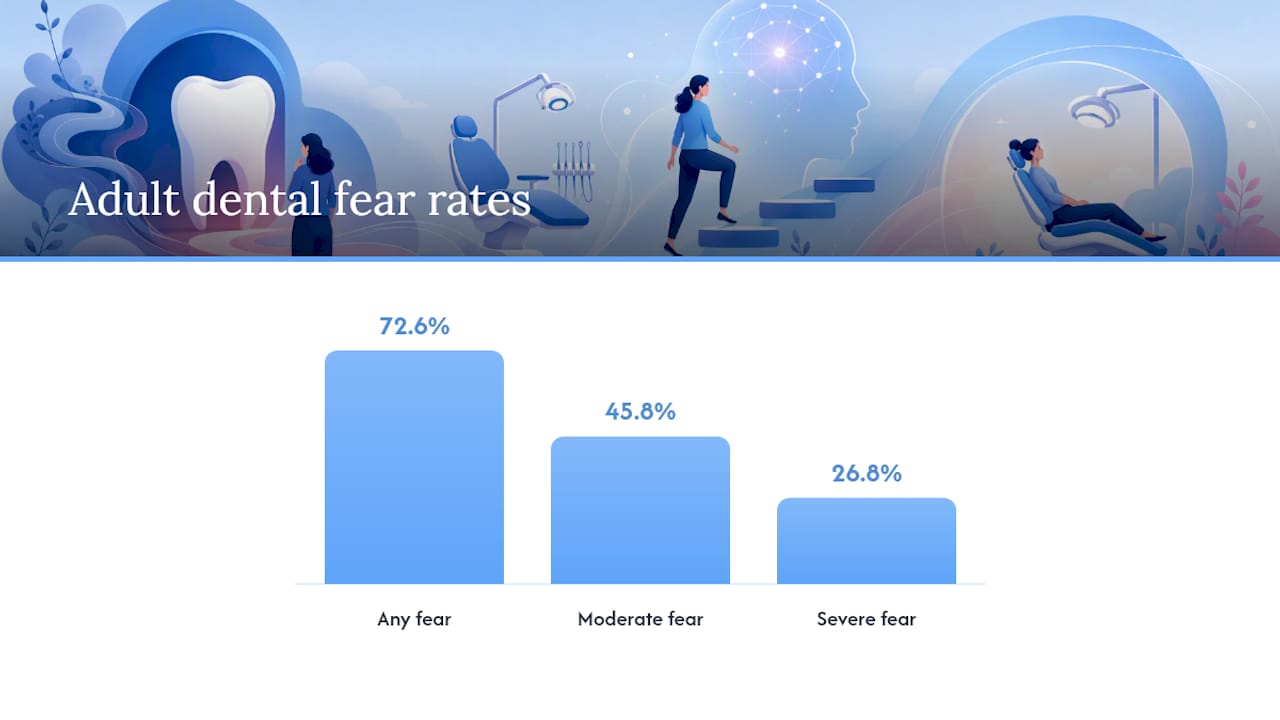
A 2024 census-matched survey of 1,003 U.S. adults found dental fear is far more common than most people assume:
- 72.6% reported some level of fear about dental visits.
- 45.8% described it as moderate.
- 26.8% described it as severe.
That data comes from a nationally representative sample surveyed in late 2024, not a self-selected group of already-anxious volunteers, which is what makes the numbers hard to dismiss. Prevalence this high explains why avoidance is such a common pattern: people skip cleanings, delay fillings, and wait until pain forces a visit. That delay tends to make the eventual appointment more invasive, which reinforces the fear that started the cycle in the first place.
Common Causes and Triggers of Dental Fear
Most adult dental phobia traces back to a handful of recurring sources, and identifying yours is often the first useful step toward managing it.
- Past negative experiences. A painful extraction, a dismissive dentist, or a botched procedure years ago can condition a lasting fear response, even after switching providers.
- Loss of control. Lying back in a chair with someone’s hands and instruments in your mouth removes your ability to see what’s happening or speak up easily, which amplifies vulnerability.
- Sensory triggers. The drill’s pitch, the smell of the office, needle sights, latex texture, or an activated gag reflex can each independently spike anxiety.
- Vicarious and learned fear. Hearing family members describe bad dental experiences, or absorbing cultural narratives about “scary dentists,” can plant fear before a person ever sits in the chair.
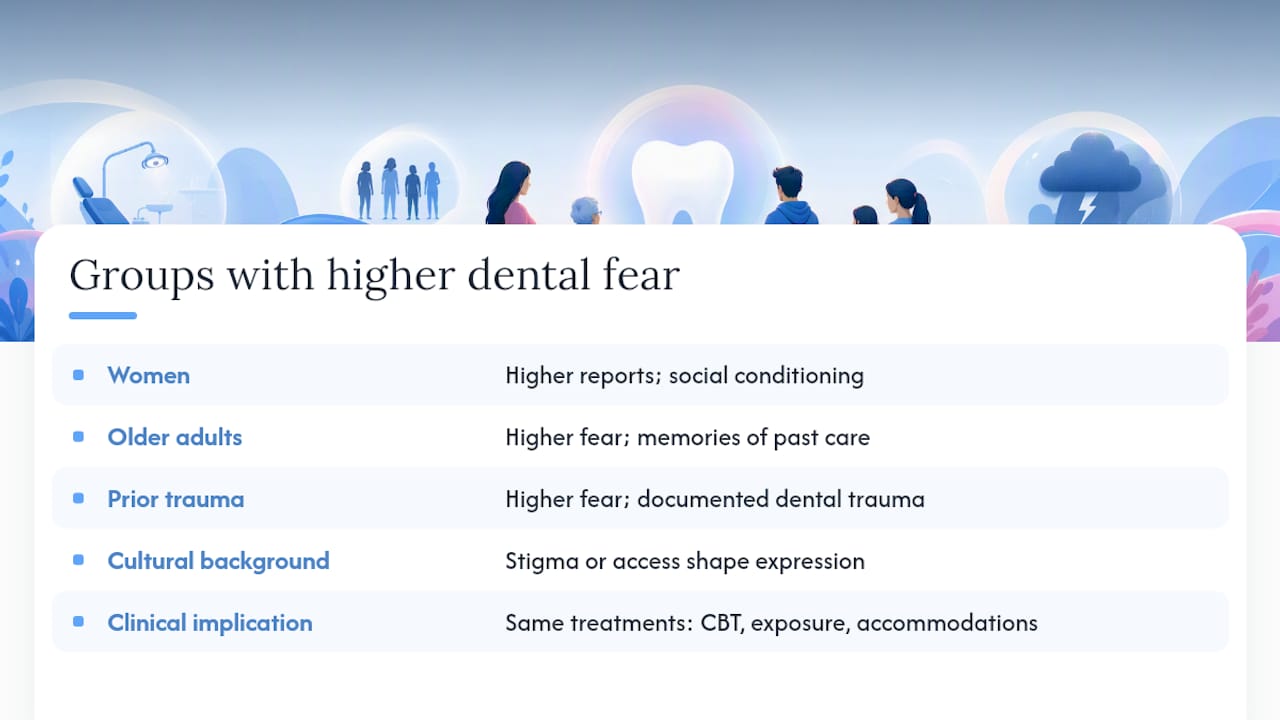
- Demographic and trauma correlations. A 2026 study found dental anxiety runs measurably higher among women, older adults, and people with a history of dental trauma or complications.
Recognizing which of these applies to you shapes which coping strategy will actually help, rather than guessing.
Symptoms, Levels, and How to Tell Where You Fall
Dental anxiety shows up in three overlapping ways: physical, emotional, and behavioral.
- Physical: sweating, a racing heart, nausea, tense shoulders, or shallow breathing before and during the appointment.
- Emotional: dread that builds for days beforehand, a sense of panic once seated in the chair, or intrusive thoughts about pain or loss of control.
- Behavioral: repeatedly rescheduling, showing up but refusing treatment, or avoiding the dentist for years at a stretch.
Severity tends to follow a rough progression. Mild anxiety looks like pre-appointment nerves that fade once treatment starts. Moderate anxiety involves visible distress, gripping the armrests, or needing frequent breaks, but the person still completes care. Severe anxiety, closer to dentophobia, often means canceled appointments, panic attacks in the waiting room, or years of total avoidance.
Two validated tools help pin down where you land. The Modified Dental Anxiety Scale (MDAS) is a short five-item questionnaire covering anticipation and specific procedures like injections and drilling, scored to flag mild, moderate, or severe fear. The Gatchel single-item scale is even quicker: a single question rating dental fear from 1 to 5, useful as a fast check-in before deciding whether to pursue further treatment.
How Dentists Assess and Categorize Anxiety in Practice
Most dental clinics use a mix of self-report and observation rather than a formal psychological workup. A short questionnaire at intake, sometimes the MDAS or a simplified version of it, gives the dentist a baseline before you’re ever in the chair. Some clinicians also ask a direct verbal question, closer to the Gatchel single-item approach, because it’s fast and doesn’t require paperwork.
Beyond self-report, dentists sometimes note objective signs like elevated heart rate or blood pressure, particularly for patients flagged as moderately or severely anxious. Neither measure replaces what the patient reports; they simply confirm it.
That combined picture steers the plan. A patient scoring mild to moderate on the MDAS with steady vitals usually gets behavioral accommodations, like more frequent breaks or a stop signal. A patient scoring severe, especially with a history of panic attacks in dental settings, is more likely to be steered toward a psychological referral or a sedation consult before any drilling starts.
What Actually Works: CBT, Exposure, and Other Evidence-Backed Approaches
Cognitive behavioral therapy (CBT) combined with graded exposure is the treatment systematic reviews consistently rank as first-line for adult dental anxiety, ahead of sedation or medication for most cases. CBT works by identifying the specific catastrophic thoughts driving the fear (“the pain will be unbearable,” “I’ll lose control”) and testing them against reality, while graded exposure has the person face smaller, manageable versions of the trigger before working up to the full procedure.
A typical graded exposure sequence for dental fear might look like this:
- Visit the office without any treatment, just to sit in the waiting room.
- Sit in the dental chair for a few minutes with no instruments involved.
- Tolerate a brief oral exam with no drilling or injections.
- Complete a simple cleaning.
- Move toward the procedure that originally triggered the fear.
Each step is meant to be tolerable, not overwhelming, and the person doesn’t move to the next step until the current one feels manageable. This usually takes multiple short sessions rather than one long appointment, which is part of why it works better than gritting your teeth through a single dreaded visit.
Virtual reality exposure therapy (VRET) is an emerging option that lets a person practice a simulated dental environment before facing the real one. Early evidence is promising, though dental-specific research on VRET is still limited compared to its use in other phobias, so it’s best treated as a supplement rather than a replacement for in-person exposure work.
Other adjunct techniques with real support include:
- Paced breathing and progressive muscle relaxation to lower physiological arousal before and during treatment.
- Distraction methods, including music, noise-canceling headphones, or guided visualization.
- Biofeedback, which gives real-time feedback on heart rate or muscle tension so a person can self-regulate.
- Clinical hypnosis, used in some practices as an adjunct for needle- or drill-specific fear.
Clinicians generally recommend combining approaches rather than picking just one. CBT paired with a stop signal and music, for instance, tends to outperform any single tactic used alone, because it addresses the cognitive fear and the in-the-moment physical response at the same time.
Sedation and Medication Options for Severe Dental Fear
When psychological approaches alone aren’t enough, dentists have several pharmacological tools, each suited to a different severity level.
- Nitrous oxide (laughing gas). Inhaled through a mask, it produces a light, fast-acting calm that wears off within minutes after the mask comes off. It’s typically the mildest option and lets you drive yourself home.
- Oral sedatives. A pill taken before the appointment, usually a benzodiazepine, produces deeper relaxation than nitrous oxide but requires someone else to drive you home afterward.
- IV (conscious) sedation. Delivered through a vein for faster, more controllable effect, this is common for longer or more invasive procedures and for patients whose fear doesn’t respond to lighter sedation.
- General anesthesia. Reserved for severe phobia, extensive surgical work, or patients with special needs where cooperation isn’t possible; it requires a monitored setting and a longer recovery window.
Guidelines generally recommend trying psychological strategies first when a person’s fear allows it, since sedation adds cost, recovery time, and medical risk that CBT and exposure don’t carry. Whichever option you’re considering, disclose your full medical history and current medications to your dentist beforehand. Interactions between sedatives and existing prescriptions, along with conditions like sleep apnea, can change which option is safe for you.
Practical Coping Steps for Before and During Your Appointment
You don’t need a full treatment plan to make the next appointment more bearable. A few concrete steps, used together, cover most of what research supports.
- Call ahead and name the fear. Tell the front desk or dentist directly that you have dental anxiety. This alone lets staff adjust pacing and explain each step before it happens.
- Ask about a short, no-treatment visit first. Many offices will let you come in just to sit in the chair or meet the hygienist, no procedures involved, as a low-stakes warm-up.
- Agree on a stop signal. Raising a hand as a nonverbal pause cue is one of the simplest tools for restoring a sense of control mid-procedure, and it doesn’t interrupt the dentist’s workflow when used correctly.
- Bring headphones or ask about noise-canceling options. Blocking the drill sound removes one of the most common sensory triggers entirely.
- Use paced breathing in the chair. Slow, deliberate breaths (in for four counts, out for six) counteract the physical panic response better than trying to “just relax.”
- Bring a trusted person if the office allows it. Having someone familiar in the room can lower baseline anxiety for people who fear being alone and vulnerable.
- Practice small exposure steps between visits. Rehearsing calm breathing, watching videos of routine cleanings, or visiting the office lobby without an appointment builds tolerance gradually rather than all at once.
Pro Tip: Practice your stop signal and breathing pattern at home, out loud, a day or two before the appointment. Rehearsing it when you’re calm makes it far more likely you’ll actually use it when you’re not.
When to Get Professional Help and How to Plan the Next Step
Some signs point past self-management toward professional support. If you’ve had a full panic attack in a dental setting, if you’ve avoided the dentist for years despite pain or visible problems, or if the fear is bleeding into other parts of your life, it’s worth talking to a therapist as well as your dentist.
Asking your dentist for a referral is simpler than it sounds. A direct line like “my anxiety is severe enough that I think I need extra support, can you refer me to a therapist or discuss sedation options” gives them what they need to route you appropriately.
A realistic plan often layers three things: small-step exposure practice between visits, in-office accommodations like breaks and a stop signal, and, if needed, a pharmacological adjunct such as nitrous oxide for the first few appointments while confidence builds.
What Micro-Steps Actually Change
Most advice about dental fear treats the whole appointment as one giant hurdle. That framing is part of the problem. Breaking a feared situation into steps small enough that each one feels almost boring to attempt is what graded exposure is built on, and it’s the same logic behind gamified micro-step tracking: lower the activation energy for the first step until starting is no longer the hard part.
A tool like Conquer Fear applies that structure to fear work generally, letting someone build a personal ladder of small, specific steps and track attempts over time. It’s a self-guided app, inspired by exposure principles, not a substitute for therapy or dental care. If dental visits are one thread in a wider pattern of avoidance, the comfort zone challenge walks through how to size those steps using distress ratings, which pairs naturally with the appointment ladder described earlier.
Why Preparation Changes How Much You Suffer
Uncertainty is one of the biggest amplifiers of dental fear, and it’s also one of the easiest to fix. When a dentist explains what a tool does before it touches you, what a sound means, or how long a step will take, the brain has less room to fill in the worst-case scenario on its own.
This is why intake conversations matter more than most patients expect. A dentist who walks through the plan for the visit, step by step, before starting gives you a mental map to follow. Without that map, every new sound or sensation becomes a potential threat instead of an expected part of the process.
Preparedness also works in the other direction: patient-side planning. Knowing your own triggers well enough to name them (“the sound of the suction tool gets me more than the drill”) lets you ask for specific accommodations instead of a vague “I’m nervous,” which staff can act on more precisely. Clinics that specialize in anxious patients, like Evolved Dentistry’s anxiety-focused approach, often build this kind of pre-visit conversation into intake specifically because it reduces cancellations and incomplete treatments.
Preventive visits fit into this same logic. Regular check-ups catch small problems before they become the kind of invasive, painful procedures that create new trauma and reinforce existing fear. Skipping cleanings to avoid short-term discomfort tends to guarantee a harder appointment later.
Do Apps and Digital Tools Actually Help With Dental Anxiety?
Interest in digital tools for dental fear is high and growing. In the same census-matched survey that found 72.6% of adults report dental fear, 71.2% of the fearful respondents said they’d be interested in a brief digital treatment option. That’s a strong signal of unmet demand, even though dental-specific app research is still catching up to that interest.
What digital tools tend to do well is give people a private, low-pressure space to practice the groundwork of exposure work: rehearsing calm breathing, watching procedure videos at their own pace, or logging small wins between visits. What they don’t do is replace an actual dentist’s chair time or diagnose a phobia. VRET research shows promise for simulating dental environments, but the evidence base remains smaller than for other phobias like flying or heights.
Where digital tools add real value is consistency. A five-minute breathing exercise the night before an appointment, done the same way every time, builds a pattern your nervous system starts to recognize as safe. Self-guided apps built around small, trackable steps, rather than generic meditation content, tend to fit this use case better because they mirror the graded exposure structure clinicians already recommend.
Cultural and Demographic Differences in Dental Fear
Dental anxiety isn’t distributed evenly across the population. Research tracking demographic patterns has found dental fear runs measurably higher among women, older adults, and people with a documented history of dental trauma. That pattern likely reflects a mix of factors: women may be more likely to report fear openly due to social conditioning around emotional disclosure, while older adults often carry memories of dental care from decades ago, when techniques and pain management were considerably less refined.
Cultural background also shapes how dental fear gets expressed and addressed. In some communities, admitting fear of a medical or dental procedure carries stigma, which pushes people toward silent avoidance rather than asking for accommodations. In others, dental care itself may be less accessible or less routine, meaning fear compounds with logistical barriers like cost or distance to a provider.
None of this changes the core treatment approach. CBT, graded exposure, and practical accommodations work regardless of background. But a dentist or therapist aware of these patterns is better positioned to ask the right questions rather than assuming every anxious patient’s fear stems from the same source. If you fall into one of these higher-risk groups, that’s not a life sentence; it’s useful information about why your fear may be more entrenched, and why patience with the exposure process matters more, not less.
A Few Honest Words Before Your Next Appointment
If you’ve been avoiding the dentist for years, you’re not broken and you’re not alone. Many adults report some level of dental fear, and a significant minority describe it as severe. That’s not a fringe experience; it’s closer to the norm than most people admit out loud.
The combination that tends to work best isn’t a single fix. It’s small, practiced steps paired with clear communication and, when needed, the right sedation option. Your one tiny move today: call your dental office and ask for headphones, a stop signal, or a short visit with no treatment involved. That’s the whole ask.
— Ryan
Try a Small Step With Life is a Game
If dental visits are one item on a longer list of things you’ve been avoiding, you don’t need to fix all of them at once, and you don’t need a clinical diagnosis to start practicing. A self-guided app can help build that practice one small step at a time, without committing to a full therapy program before you know if structured exposure work even fits how you think.
Conquer Fear breaks a feared situation, dental visits included, into a personal ladder of small, specific steps: sitting in a waiting room, tolerating a short exam, working up to the procedure that scares you most. You log each attempt and how it felt, which turns “I’m working on this” into something you can actually see progress on. It’s a self-guided wellness tool, inspired by exposure principles, not therapy and not a diagnosis. If you coach others through fear as part of your work, the coaching platform starts with a Founding cohort at £29 per month per coach, letting you assign ladders and see between-session progress with client consent. Either way, the first move is small: open the app, pick one fear, and take the first step on the ladder today.
Sources
- A census-matched survey of dental fear and fear-treatment interest in the United States.
- Dentophobia (Fear of Dentists): Causes, Symptoms & Treatment — Cleveland Clinic
- Manage strategies for adult patients with dental anxiety in the dental clinic: a systematic review — PMC
FAQ
What is the best way to manage dental anxiety?
The strongest evidence points to CBT combined with graded exposure, working up gradually from sitting in the chair to completing the feared procedure. Pairing that with a stop signal, paced breathing, and clear communication with your dentist covers most of what research on adult dental anxiety recommends.
What can I do if I’m too scared to go to the dentist?
Start smaller than a full appointment. Call the office, explain your fear directly, and ask for a short visit involving no treatment at all, just sitting in the chair or meeting the team. That single step often breaks the avoidance cycle that keeps the fear entrenched.
What does dental anxiety feel like?
It typically shows up as a mix of physical symptoms (racing heart, sweating, nausea), emotional dread that builds before the visit, and behavioral avoidance like repeatedly canceling appointments. Severity ranges from mild pre-appointment nerves to full panic attacks in severe cases.
Can you be sedated at the dentist for dental anxiety?
Yes. Options range from nitrous oxide for light, fast-acting calm to oral sedatives, IV sedation, and general anesthesia for the most severe cases or complex procedures. Guidelines generally recommend trying psychological approaches first when your fear level allows it, since sedation carries added cost and medical risk.